What Should You Charge for Your E-Book? A Real-Numbers Guide for Indie Authors

Here's a scenario that plays out constantly in indie author forums: someone spends eighteen months writing a novel, formats it beautifully, designs a solid cover, and then — in a moment of either panic or misplaced humility — slaps a $0.99 price tag on it. Or the opposite happens: they price it at $9.99 because that's what a paperback costs, and then wonder why nobody's buying.
Pricing an e-book is genuinely tricky, and the stakes are higher than most new authors realize. Get it right, and you've got a product that converts browsers into buyers. Get it wrong, and even a great book can sit there quietly collecting digital dust. So let's talk numbers — real ones.
The Psychology Behind the Price Tag
Before we get into royalty math, it helps to understand how readers actually make purchase decisions. E-books live in impulse-buy territory. Unlike a $30 hardcover that requires some deliberation, a digital book priced between $2.99 and $4.99 sits comfortably in the "why not?" zone for most American readers. That's not a guess — it's a pattern that shows up repeatedly in sales data from platforms like Amazon KDP and Draft2Digital.
 Photo: Amazon KDP, via thumbs.dreamstime.com
The $0.99 price point sends a signal, and it's not always the one you want. Yes, it lowers the barrier to entry, but it can also suggest the book isn't worth much. Readers aren't purely rational — they use price as a proxy for quality, especially when they don't know your name yet. A $0.99 debut novel from an unknown author reads differently than a $0.99 sale on a book that's normally $4.99. Context matters enormously.
On the flip end, pricing above $6.99 for fiction from an indie author is a tough sell unless you've already built a serious readership. Readers comparing your $8.99 e-book to a traditionally published title at the same price will often default to the known quantity.
Genre Changes Everything
One of the biggest mistakes indie authors make is treating e-book pricing like a one-size-fits-all decision. Genre norms vary a lot, and ignoring them is a fast way to misprice yourself out of sales.
Romance and genre fiction (thrillers, paranormal, cozy mysteries) tend to perform best in the $2.99–$4.99 range. These genres have enormous, voracious readerships who consume multiple books a month. They're price-sensitive in a specific way — they'll buy ten $3.99 books before they'll buy one $9.99 book. Series pricing is also a major factor here: many successful romance authors offer the first book in a series for free or $0.99 as a loss leader, then price subsequent books at $3.99–$4.99.
Literary fiction and narrative nonfiction can push slightly higher — $4.99 to $6.99 — partly because readers in those categories are used to paying more and partly because the purchase decision is less impulsive and more considered.
Nonfiction how-to and business books have the most pricing flexibility. A tightly focused guide that solves a specific problem (think: a 15,000-word book on freelance invoicing or sourdough troubleshooting) can reasonably sell at $7.99 to $9.99 if the content delivers. People will pay for expertise they can apply immediately.
The Royalty Math You Actually Need to Know
On Amazon KDP — still the dominant platform in the US market — royalty rates hinge on your price point in a way that directly affects your strategy.
Books priced between $2.99 and $9.99 earn a 70% royalty (minus a small delivery fee based on file size). Books priced below $2.99 or above $9.99 drop to a 35% royalty. That cliff at $2.99 is significant. A book priced at $2.99 at 70% earns you about $2.09 per sale. That same book at $0.99 earns you roughly $0.35. You'd need to sell six times as many copies at $0.99 just to match the revenue from $2.99.
This is why most experienced indie authors treat $2.99 as a floor, not a starting point. The $0.99 price is useful in specific situations — a permanent price for a series starter, a limited-time promotion, or a short story — but it's rarely a smart default.
On platforms like Kobo, Apple Books, and Barnes & Noble Press (distributed through aggregators like Draft2Digital or Smashwords), royalty structures are broadly similar, though the delivery fee mechanics differ slightly. The strategic logic holds: pricing in the $2.99–$5.99 range tends to maximize both revenue per sale and conversion rate.
Free Promotions and Kindle Unlimited: Tools, Not Crutches
Kindle Unlimited (KU) deserves its own mention because it changes the calculus for authors enrolled in Amazon's KDP Select program. Instead of earning a per-sale royalty, KU authors earn per page read from a shared monthly pool. The rate fluctuates but has historically landed around $0.004–$0.005 per page — meaning a 300-page novel read in full might earn $1.20 to $1.50.
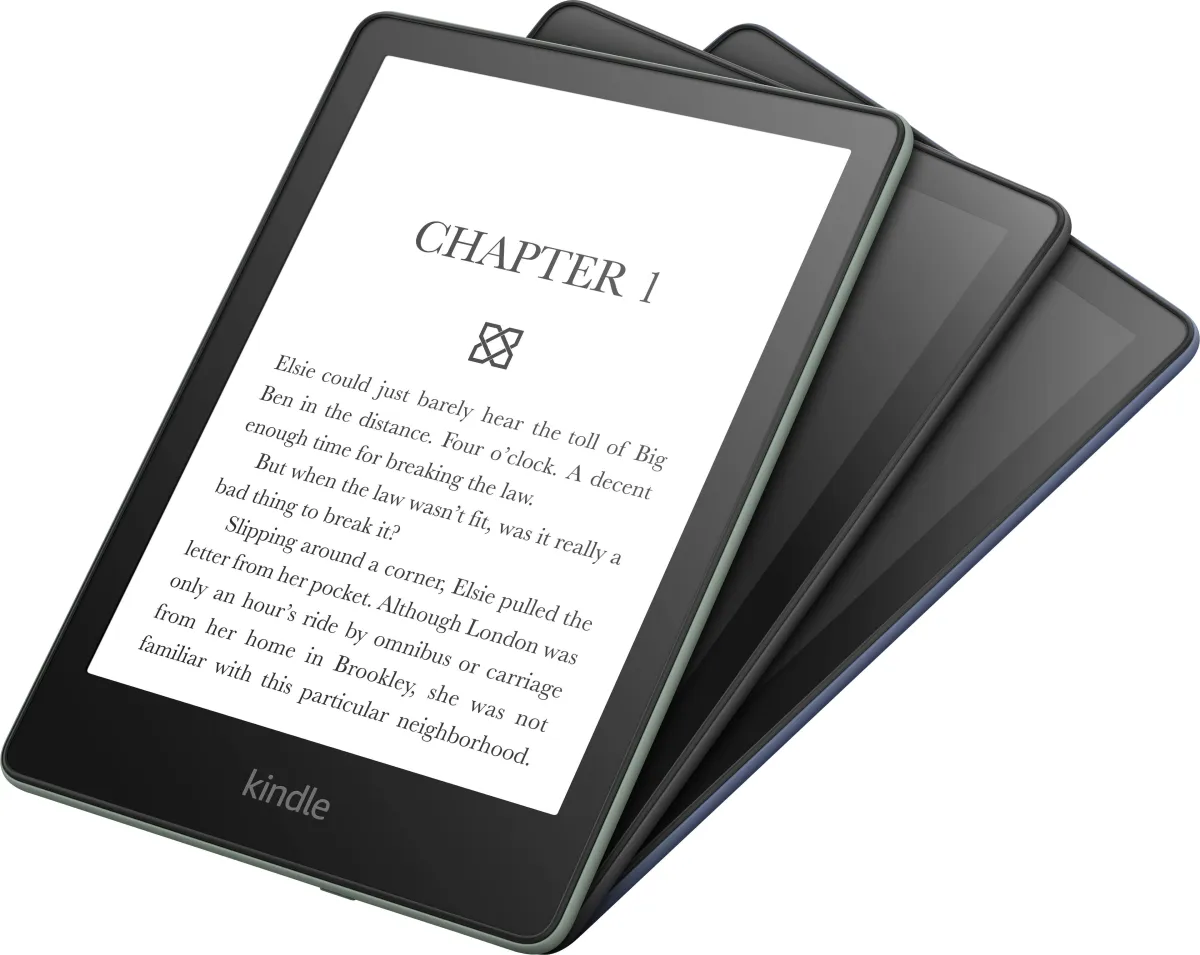 Photo: Kindle Unlimited, via pisces.bbystatic.com
For high-volume genre authors with long series, KU can be a goldmine. For authors with a single title or a slower release pace, it's often less compelling — especially since KDP Select requires exclusivity to Amazon, cutting you off from Kobo, Apple Books, and other retailers.
Free promotions (either through KDP Select's free days or permafree pricing on wide platforms) work best as visibility tools, not revenue strategies. Authors like Elana Johnson and Nick Stephenson have written extensively about using a free first-in-series to drive readers into a paid backlist. The model works — but only if you have subsequent books to sell.
How to Build a Pricing Strategy Over Time
Here's a practical framework for thinking about pricing across your publishing life:
- Launch at your target long-term price. Don't underprice out of insecurity. If your genre norm is $3.99, start there.
- Run a promotional discount around 30–60 days post-launch to capture a second wave of readers and gather reviews. Tools like BookBub Featured Deals, Bargain Booksy, and ENT (Ereader News Today) can amplify a temporary price drop.
- Experiment with price increases as your catalog grows. Authors with three or more books often find they can push prices slightly higher because readers who love book one will pay more for book two.
- Track your conversion data. Amazon's KDP dashboard shows you sales trends. If you drop from $4.99 to $2.99 and sales don't meaningfully jump, that tells you something. If they double, that tells you something else.
The Bottom Line
There's no magic number that works for every book, every genre, or every author. But there are patterns, and those patterns point pretty clearly toward the $2.99–$4.99 range as the sweet spot for most indie fiction authors in the US market — high enough to signal value, low enough to feel like a no-brainer.
The authors who figure this out early aren't the ones who guess right on the first try. They're the ones who treat pricing as an ongoing experiment rather than a one-time decision. Your price isn't carved in stone. Adjust it, test it, and follow the data wherever it leads.