Two Formats, One Launch: The Indie Author's Guide to Releasing Your E-Book and Audiobook at the Same Time
Two Formats, One Launch: The Indie Author's Guide to Releasing Your E-Book and Audiobook at the Same Time
Not long ago, releasing an audiobook as an indie author felt like something reserved for writers who'd already landed a traditional deal — the kind with a publicist, a production budget, and a recognizable narrator doing the rounds on podcasts. That world has changed pretty dramatically. Today, a self-published author finishing up their manuscript in a Denver apartment has access to the same distribution pipelines that major publishers use, and at a fraction of the cost.
The numbers make a compelling case for paying attention. Audiobook revenue in the US has climbed steadily for over a decade, with the Audio Publishers Association reporting that the market has grown for 11 consecutive years. Readers aren't just listening more — they're listening instead of reading in some cases, or stacking both formats depending on the moment. Commutes, gym sessions, cooking dinner: audio fits into the gaps of American life in ways that even e-books sometimes can't.
For indie authors already publishing digitally, the question isn't really whether to add audio anymore. It's how — and how soon.
Why Simultaneous Launch Actually Matters
There's a temptation to treat the audiobook as a Phase 2 project — something you'll get around to after the e-book is out and generating some buzz. It's a logical instinct, but it tends to backfire.
When you launch both formats together, you're essentially doubling your surface area on release day. Readers who discover you through an audiobook platform like Audible or Libro.fm may never cross paths with your e-book listing on their own. The reverse is equally true. A simultaneous launch means every press mention, every social media post, every newsletter blast is working for two products at once instead of one.
There's also an algorithmic argument. Platforms reward new releases with visibility bumps — search placement, featured spots, recommendation nudges. If you stagger your launch by six months, you're essentially asking for two separate miracles instead of concentrating your momentum into one well-timed push.
The Main Platforms: Where Your Audio Actually Lives
Before you can decide how to produce your audiobook, it helps to know where it's going to end up.
ACX (Audiobook Creation Exchange) is Amazon's marketplace, and it's been the default starting point for most indie authors for years. It connects authors directly with narrators, lets you post auditions, and distributes finished audiobooks through Audible, Amazon, and iTunes. The catch: if you go exclusive with ACX, you're locked out of other platforms for seven years. In exchange, you get a higher royalty rate (40% versus 25% non-exclusive). Whether that tradeoff makes sense depends heavily on where your readers actually are.
Findaway Voices, now part of Spotify, takes a different approach. It's non-exclusive by default, and it distributes to over 40 platforms — including Audible, Scribd, Kobo, and library services like OverDrive. For authors who've built an audience outside the Amazon ecosystem, or who simply don't want to be locked in, Findaway is worth a serious look. You keep more creative control, and your audiobook can live pretty much everywhere your e-book already does.
Spotify for Podcasters / Spotify Audiobooks is newer to the game but increasingly relevant as Spotify pushes into the audiobook space aggressively. Keep an eye on this one — it's moving fast.
Narration Options: Professional vs. AI (and the Honest Tradeoffs)
This is where indie authors tend to get stuck, mostly because the cost gap between options is significant.
Hiring a professional narrator is the gold standard. A skilled narrator brings a finished audiobook to life in ways that are genuinely hard to replicate — pacing, character differentiation, emotional texture. The cost, however, is real. Industry rates typically run between $200 and $400 per finished hour of audio, which means a 70,000-word novel (roughly 7–8 hours of audio) could cost you anywhere from $1,400 to $3,200 or more. ACX does offer a royalty-share option where the narrator works for free upfront in exchange for a cut of future earnings, but high-quality narrators are increasingly selective about royalty-share projects.
AI narration tools have gotten genuinely impressive in the last couple of years, and they're worth an honest look rather than a reflexive dismissal. Tools like ElevenLabs, Speechify, and Amazon's own AI narration option (available to select ACX authors) can produce clean, listenable audio at a fraction of the cost — sometimes close to zero for short-form content. The tradeoffs are real, though. AI narration still struggles with complex dialogue, regional accents, and the kind of emotional nuance that keeps a listener hooked through a tense chapter. For nonfiction, business books, or self-help content, AI narration can be surprisingly effective. For literary fiction, it's a harder sell.
The middle path some authors are finding: hire a professional narrator for a few key chapters or the opening hook, use AI for the remainder, and be transparent about the production approach. It's unconventional, but it's a conversation worth having with your audience.
Keeping Costs Manageable Without Cutting Corners
Dual-format publishing doesn't have to mean doubling your budget — especially if you're strategic about it from the start.
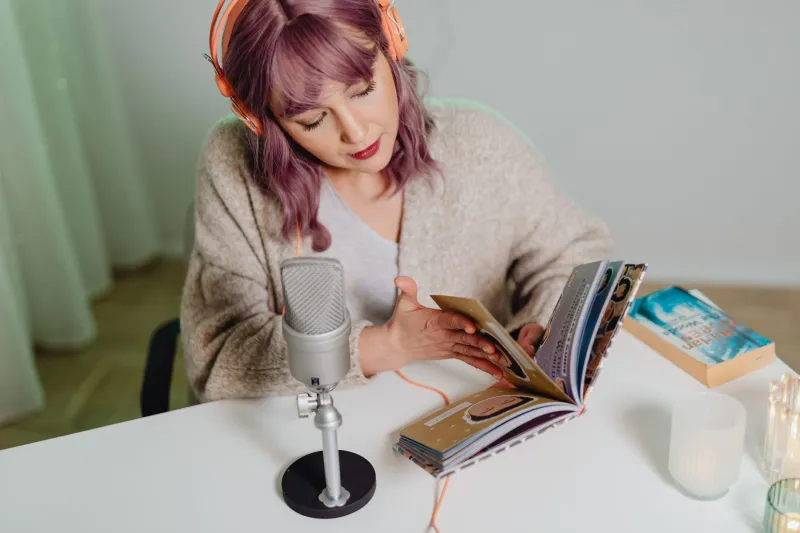
One underrated move: record your own narration. If you have a decent microphone setup and a quiet space, self-narration costs almost nothing beyond your time. Readers often respond warmly to hearing an author's own voice, particularly for memoir, personal essay collections, or nonfiction where your perspective is the whole point. Free tools like Audacity can handle basic editing, and ACX has detailed technical specs that are easy to follow.
For authors who want professional results without the full per-finished-hour cost, some narrators offer package pricing for shorter works. Novellas, short story collections, and business books under 40,000 words can come in well under $1,000 with the right narrator.
Connecting the Formats for Your Readers
Once both versions are live, make sure they're talking to each other. Your e-book's back matter — the section after the story ends — is valuable real estate. Include a note pointing readers to the audiobook version, with a direct link if your distribution platform allows it. Do the same in reverse: some audiobook platforms let you include a brief mention of companion formats.
If you're distributing your e-book through a platform that offers bundling (Libro.fm has experimented with this, and some smaller platforms offer e-book/audio combos), that's worth exploring too. Readers who buy both formats tend to be your most engaged audience — the kind who leave reviews, recommend you to friends, and come back for your next book.
The indie publishing landscape has always rewarded authors who treat their work as a business without losing sight of why they started writing in the first place. Adding audio to your launch isn't a complicated pivot — it's just meeting your readers where they already are.