Click Here to Turn the Page: When E-Books Become Something Else Entirely
Somewhere between a novel and a video game, a new kind of story is taking shape.
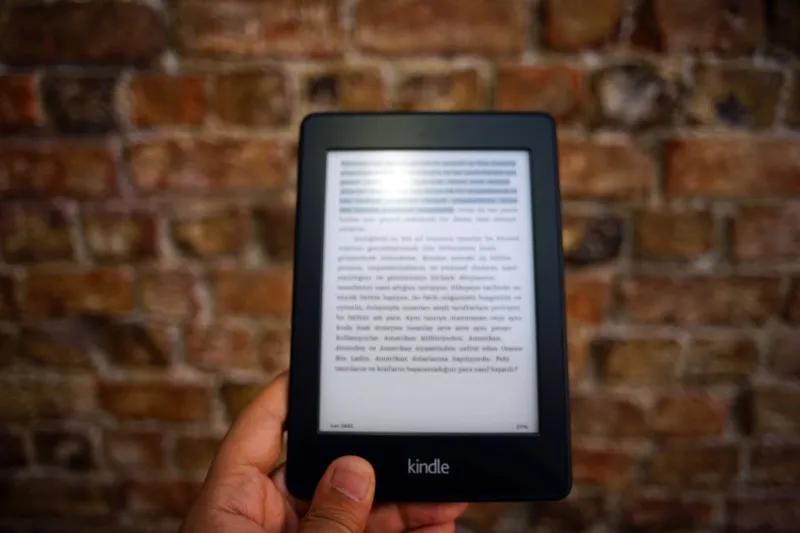
It might look like an e-book at first glance — text on a screen, chapters, maybe a cover image. But then you reach a decision point. Two characters are arguing, and the story pauses. Do you intervene, or let it play out? You tap a choice. The narrative branches. The chapter that follows is different from the one your friend read when she made a different call.
Or maybe the book plays ambient sound as you read — rain against windows during a thriller's tense scene, a crowd murmuring as your protagonist walks through a market. Maybe there's a map you can actually explore. Maybe the "author's note" is a short video.
This is the frontier of digital publishing right now, and it's raising a question that sounds simple but isn't: what, exactly, is a book?
The Roots of Interactive Fiction
None of this is entirely new. Choose-your-own-adventure books were a print phenomenon in the 1980s, and interactive fiction as a digital form goes back to text adventures on early home computers. What's changed is the technology available to authors and the distribution infrastructure that can deliver complex, multimedia experiences to readers' devices at scale.
Platforms designed around EPUB3 — the current standard for e-book formatting — technically support embedded audio, video, and interactive elements. The standard has existed for years. What's new is that more authors are actually using it, and more readers have devices capable of handling it gracefully.
"EPUB3 was always supposed to enable this," says one digital publishing consultant who has helped indie authors build interactive titles. "The problem was that for a long time, the major e-reader hardware and software wasn't keeping up. Now it mostly is, and you're starting to see authors push the boundaries in ways that weren't practical before."
Authors Who Are Actually Doing It
Tamara Osei writes what she calls "layered fiction" — novellas that include embedded playlists synced to emotional beats in the text, optional footnotes that expand the world without cluttering the main narrative, and, in her most recent release, a branching final chapter with three distinct endings.
"I think of it less like a game and more like a director's cut," Osei explains. "The main story is the main story. Everything else is for readers who want to go deeper. You can ignore the extras entirely and have a complete experience, or you can use them and have a richer one."
Her approach is deliberately additive rather than structural — the branching element is confined to the ending rather than woven throughout. She made that choice deliberately. "Full branching narratives are incredibly hard to write well. Every choice has to feel meaningful, and you have to essentially write multiple books to make one. I wanted to experiment without committing to something I couldn't sustain."
On the more experimental end, a small collective of authors working under the name Threadline has released what they describe as a "navigable novel" — a story with no fixed reading order, structured instead around interconnected scenes that readers move through based on their own curiosity. There are thematic paths, character-centered paths, and a chronological path for readers who want something more traditional. The experience is deliberately disorienting at first and deliberately rewarding once you find your footing.
"We were influenced by the way people actually move through information online," says one Threadline member. "Nonlinearly. Following what interests them. We wanted to make a novel that worked that way."
What Readers Actually Think
Reader reactions to these formats are, predictably, mixed.
Enthusiasts tend to be younger readers who grew up with games and social media and don't experience the blend of text and interactivity as jarring. For them, a story that responds to their choices feels more alive, not less literary.
Skeptics — and there are plenty — push back on a few different grounds. Some argue that the author's choices are the story, and that giving readers a steering wheel undermines the intentionality that makes literature meaningful. Others find the multimedia elements distracting rather than enriching. A soundtrack might enhance a scene for one reader and completely shatter immersion for another.
"I want to disappear into a book," says one reader in an online forum thread that drew hundreds of responses. "The moment I'm making choices or watching a video, I'm aware that I'm using a device. That awareness is what reading is supposed to help me escape."
That tension — between immersion and engagement, between the passive pleasure of being told a story and the active pleasure of shaping one — is probably the central question these new formats have to answer.
The Business Reality
Beyond aesthetics, there are practical questions about whether interactive e-books can work commercially.
Producing a branching narrative with multimedia elements costs significantly more than producing a standard e-book. Distribution is also more complicated — not every platform handles EPUB3's interactive features consistently, and formatting for multiple devices while preserving the interactive experience is genuinely difficult.
For now, most interactive e-book experiments are happening at the indie level, where authors have creative control and are willing to absorb the additional production work. Major publishers have largely stayed on the sidelines, with occasional experiments that haven't translated into mainstream adoption.
There's also a discoverability problem. Most e-book platforms aren't built to surface interactive titles as a distinct category, which means readers who might love them often don't know they exist.
A New Format, Not a Replacement
Here's probably the most honest take on where this is all heading: interactive and hybrid e-books are likely to carve out a real niche without replacing the traditional digital novel any more than podcasts replaced radio or streaming replaced television.
Different formats serve different reading moods. Sometimes you want a book that does all the work — that takes you somewhere and brings you back. Sometimes you want to be a participant. The digital publishing ecosystem is large enough to hold both.
What's genuinely exciting is that the tools now exist for authors to experiment in ways that weren't previously possible, and distribution platforms are slowly catching up to support those experiments. The question of what a book is may never have a clean answer — but the conversation itself is producing some genuinely interesting stories.
And in the end, that's probably the point.