America's Reading Map: What 2025 Genre Trends Reveal About Who We Really Are
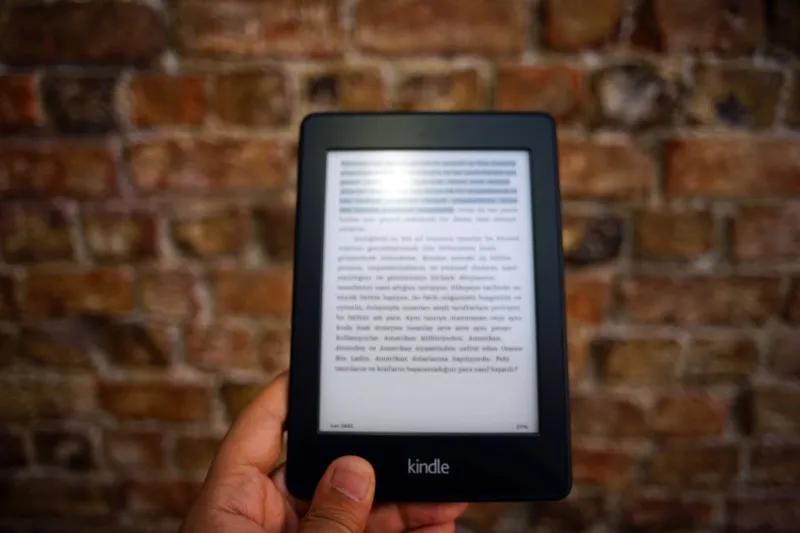
If you want to understand a country, look at what it reads when nobody's watching. And increasingly, that means looking at e-book data — the quiet, anonymized flood of information that platforms accumulate every time someone opens a file, highlights a passage, or abandons a chapter at 11 PM on a Tuesday.
What that data shows about American readers in 2025 is genuinely interesting — and occasionally surprising.
Romance Still Rules, But It's Complicated
Let's start with the obvious: romance is, by almost every measure, the dominant genre in e-book sales in the United States. This isn't new. Romance has topped digital sales charts for years, and the numbers have only grown as subscription platforms lowered the cost of sampling widely. But the shape of romance readership has shifted in ways worth paying attention to.
Subgenres that barely registered five years ago — romantasy (the romance-fantasy hybrid that exploded in the wake of authors like Sarah J. Maas), dark romance with morally complex leads, and what readers are calling "cozy romance" — are now significant categories in their own right. On subscription platforms especially, these micro-genres are outperforming traditional category romance by completion rate, which is arguably a more meaningful metric than downloads.
"Completion rate is the number I actually care about," says one indie author who writes romantasy and asked to be identified only by her pen name, Lena Voss. "Anyone can download a free or discounted book. If readers are finishing it, that tells you something real."
Voss, who distributes through multiple platforms including epub2go, says her romantasy titles complete at a rate roughly 40% higher than her earlier straight-romance releases. "The genre blend keeps people turning pages. There's always another plot layer."
The Regional Picture Is More Nuanced Than You'd Think
Platform analytics — the aggregated, anonymized kind that doesn't identify individual readers — paint a genuinely varied picture of regional taste in the US.
Mystery and thriller titles index significantly higher in the South and Midwest than in coastal metros, where literary fiction and narrative nonfiction tend to punch above their weight. The Pacific Northwest shows disproportionate appetite for speculative fiction, particularly climate-adjacent science fiction — a trend that feels almost too on-the-nose given the region's environmental politics.
Science fiction overall is having a complicated moment. Hard SF — the kind heavy on technical extrapolation — has seen relatively flat growth in e-book sales. But "soft" science fiction, stories that use speculative settings to explore social questions rather than engineering problems, is growing steadily across demographics. Climate fiction (cli-fi), solarpunk narratives, and near-future thrillers are all performing well in digital formats specifically, possibly because e-book readers skew toward audiences already comfortable with technology.
"There's something almost recursive about it," notes one publishing analytics consultant who works with several mid-size digital distributors. "The people who've fully embraced digital reading tend to be curious about technology and its implications. So near-future fiction resonates with them in a way it might not with a reader who still prefers print."
How Subscription Models Are Rewriting the Completion Story
One of the more significant findings buried in platform data is how subscription services have changed not just what Americans read, but how far they get.
When readers pay per title, they tend to be more selective upfront and more committed once they start. When they're on a flat-rate subscription, sampling rates go up dramatically — and so do abandonment rates. The average subscription reader in 2025 is starting more books than ever and finishing a smaller percentage of them.
This has real implications for authors. In a per-sale world, your cover and your first chapter matter most. In a subscription world, your third chapter — the point where a lot of readers decide whether to keep going or move on — might be even more critical.
Genres that reward binge-reading behavior are thriving in subscription environments. Series with strong cliffhangers, interconnected worlds, and short chapter lengths are all performing well. This is one reason romantasy and cozy mystery series are growing so quickly — they're structurally built for the way subscription readers actually behave.
The Micro-Genre Moment
Perhaps the most interesting trend in 2025 isn't a genre at all — it's the fragmentation of genre itself.
Readers are increasingly self-identifying not as "mystery fans" or "romance readers" but as devotees of highly specific combinations: small-town cozy mystery with a bakery setting and no graphic violence; dark romance set in a fantasy academy with a morally ambiguous male lead; climate fiction with a hopeful ending and a focus on community organizing.
This level of specificity would have been impossible to serve in a physical bookstore. It's only really workable in digital distribution, where metadata and recommendation algorithms can match readers to exactly the kind of story they're looking for.
"I write what I call 'quiet apocalypse' fiction," says Marcus Delray, an indie author based in Atlanta whose novellas have found an audience almost entirely through digital platforms. "It's literary in tone but speculative in premise — think the world is ending, but slowly, and the story is really about a family. There's no shelf for that at Barnes & Noble. Online, my readers find me."
Delray's experience points to something larger: digital distribution isn't just changing how books are sold. It's changing which stories can exist commercially at all.
What the Numbers Say About Us
Step back from the genre breakdowns and a broader picture emerges. American e-book readers in 2025 are reading more titles per year than at any point in the digital era, driven largely by subscription access. They're more willing to try unfamiliar authors and subgenres. They're finishing fewer individual books but engaging with more stories overall.
Whether that's a good thing depends on what you think reading is for. If it's about completing individual works and sitting with them, the subscription model creates some friction. If it's about exposure to more ideas, more voices, more worlds — then American readers are having a genuinely remarkable moment.
Either way, the data is telling a story. And it's a more complicated, more regional, and more human story than any bestseller list will show you.