Breaking News, Book Format: How E-Book Platforms Are Beating Traditional Publishers to the Story
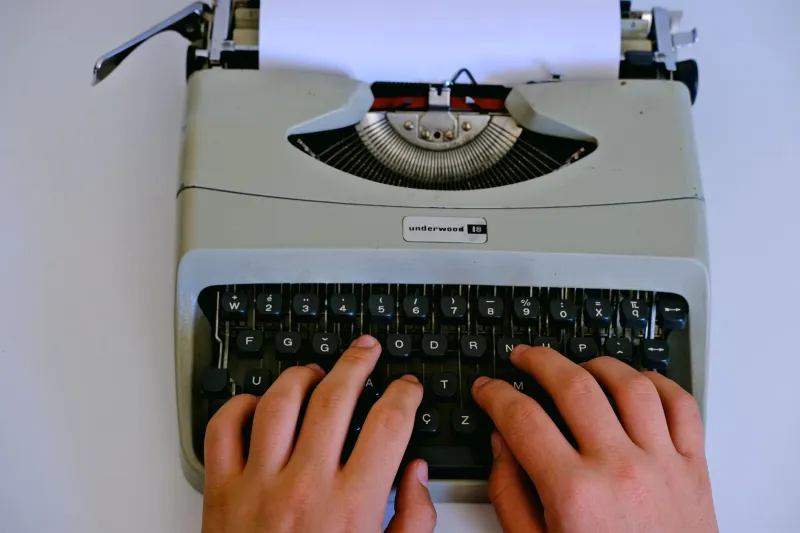
There's a peculiar gap in American media that most people feel but can't quite name. When something huge happens — a landmark Supreme Court decision, a chaotic election night, a cultural moment that seems to rewrite the rules overnight — the internet floods with hot takes, and the 24-hour news machine churns. But the books that actually dig into what it all means? Those take two years to hit shelves.
That gap is closing fast, and e-book platforms are the reason why.
The 48-Hour Book Is Real
It sounds almost absurd until you see it happen. A major ruling comes down from the Supreme Court on a Monday morning. By Wednesday, a constitutional law professor has a 15,000-word e-book live on multiple platforms, complete with historical context, plain-English analysis, and a breakdown of what comes next. No agent. No editorial board. No six-month production schedule.
This isn't a hypothetical — it's been quietly happening for years, and it's accelerating. When the Supreme Court overturned Roe v. Wade in June 2022, digital storefronts saw a spike in independently published e-books within days. Legal scholars, reproductive health advocates, and journalists who had been watching the case closely were ready. They had the knowledge, they had the drafts, and they had platforms that let them move.
The same pattern played out around the 2020 and 2024 elections. While major publishers were still in contract negotiations, independent authors and journalists were dropping e-books that gave readers something the news couldn't: room to breathe, space for nuance, and the kind of sustained argument that 800 words on a news site just can't support.
A New Genre With No Good Name Yet
Call it news-cycle publishing, rapid-release nonfiction, or just "the thing where someone explains what just happened in book form" — whatever the label, it's carving out a legitimate corner of the digital reading market.
What makes it distinct is the intent. These aren't blog posts dressed up as e-books, and they're not traditional books that happened to come out fast. They occupy a deliberate middle ground: longer and more structured than journalism, faster and more responsive than conventional publishing. Think of them as extended essays with a thesis, or reported pieces that didn't have to stop at 3,000 words because an editor said so.
Subject-matter experts are particularly well-suited to this format. An economist who's spent a decade studying housing policy doesn't need a co-author or a ghostwriter when a major Federal Reserve decision sends markets spinning. They need a platform, a deadline they set themselves, and a reader base that trusts their analysis. E-book distribution makes all three accessible in ways that simply didn't exist before.
Why Readers Are Opening Their Wallets
Here's the part that surprises people: readers are paying for this stuff. In an era when free content is essentially infinite, people are choosing to spend $4.99 or $7.99 on an e-book about something they could theoretically piece together from a dozen free articles.
The reason isn't hard to figure out. Free online coverage of major events is often fast but thin. You get the what pretty quickly. The why and the what now tend to get buried under the noise, fragmented across dozens of outlets with varying agendas, or simply never written because no one has the space for it.
Readers who are genuinely invested in understanding a topic — not just staying informed enough to have a conversation at dinner — are increasingly willing to pay for someone to do the synthesis work for them. A well-crafted rapid-release e-book saves hours of research and delivers it in a format that's actually readable on a commute or during a lunch break.
There's also a trust element. When a reader already follows a specific journalist or expert on social media and values their perspective, buying their e-book feels less like a transaction and more like a direct line to the analysis they were already looking for.
The Challenges Nobody Talks About
Speed publishing isn't without its pitfalls, and it's worth being honest about them. Moving fast means less time for fact-checking, less opportunity for outside editing, and a higher risk that a rushed argument doesn't hold up to scrutiny. The best practitioners in this space treat that pressure seriously — but not everyone does.
There's also the question of shelf life. A rapid-release e-book tied to a specific news moment can feel dated within months. For authors, that means the window to sell is narrow. For readers, it means doing a quick gut-check on when something was published before accepting its conclusions as current.
And then there's discoverability. Traditional publishing has distribution networks, publicists, and review infrastructure built up over decades. Independent rapid-release authors are often working without any of that, relying on their own platforms and word of mouth to reach readers who'd genuinely benefit from their work.
What This Means for the Future of Long-Form
The rise of news-cycle e-book publishing is doing something interesting to how Americans consume long-form content. It's not replacing journalism — it's filling a lane that journalism structurally can't occupy. And it's not replacing traditional books either. The deep, years-in-the-making narrative nonfiction that wins awards and sits on nightstands for months still has a clear audience and a clear purpose.
What's emerging is a three-tier ecosystem: breaking news at the top for speed, rapid-release e-books in the middle for depth and context, and traditional books at the base for the kind of comprehensive treatment that only time can produce.
For readers, that's genuinely good news. The idea that you'd have to wait two years to read something substantive about a moment that happened last week is starting to feel as outdated as waiting for a newspaper to arrive on your doorstep.
The story is breaking. The book is already uploading.